Friday, March 29, 2013

Choice Two


In 2 Peter 2:1-19 Peter characterizes false teachers. We need to be aware of those who deny the Lord, covet, focus on worldly views, sin continually, and do not treasure children. There are many people out there who want to lead us astray. I loved in these verses that he reminded us of the angels that the Lord had to cast out of Heaven. No one can escape the consequences of their actions and we need to be wary of what we are doing and who or what we are putting our faith in. 
Once we have repented of a sin we have committed we need to be sure that we do not fall back into old habits. The Lord will forgive us continually but we need to have a change in heart to truly repent. When we return to previous sins after we already know that righteous path we will be held even more responsibly than those who do not know of the truth. In D&C 82 verse 3 it tells us, "Unto whom much is give much is required." Because we know the truth we must cling to the rod of iron that we can live righteously. 
I have always held a great testimony in my heart of the leaders of the Church. I know that President Monson is a true prophet of God and that I can rely on him to help me return to our Father in Heaven.


"Amidst the confusion of the times, the conflicts of conscience, and the turmoil of daily living, an abiding faith becomes an anchor to our lives." --President Thomas S. Monson

Tuesday, March 19, 2013

The Trial of Our Faith Is More Precious than Gold

This week I decided to answer the question, "Life isn't fair. Why do I have to have so many trials? I'm tired of being ridiculed by those who do not keep the commandments." There were a few scripture references that I used to answer this question and they were found in 1 Peter 1: 1-9; 2:12, 15, 20-25; 3: 11-16; 4:12-19.

         We are enduring our trials because we know that they are blessings and will bring us salvation. Though others may ridicule you, you need to love them because that person is a child of God. By doing the will of the Lord, patience through our trials, we are able to silence those that persecute us. You are able to be an example to them. You may have many trials but the Lord with help you through those hard times and you will come out conqueror. When we suffer through trails with a happy heart we are able to have a good conscience and turn away “evildoers.” 
The Lord suffered so much for us and we need to be willing to suffer these smaller trials with dignity. Not only has the Lord given us these blessings he has made promises to us that the evildoers will reap what they sow. When another person is judging you and not working on themselves then they are going to have to pay for their own sins. We need not be put off by those around us but strive to be more and more like our Father in Heaven. We should have charity, the pure love of Christ, for all the children of God. 

Thursday, March 14, 2013

Works of Righteousness


Paul concluded his epistle to the Hebrews with some brief teachings and statements of counsel. Read Hebrews 13 and find statements about the following questions:

• How should we treat strangers and those “in bonds”?
We should always remember those who are "in bonds." We shouldn't look down on them because we too are in bonds. 
• How is marriage looked upon?
In verse four Paul talk about marriage be honorable and to be undefiled. It is a sacred thing that should be treated with the utmost respect. 
• What warnings are given about covetousness?
We shouldn't covet and we should be grateful for the things we have. We should give thanks to the Lord continually for the things we have been blessed with. 
• What is “the same yesterday, and to day, and for ever”?
Jesus Christ is the same always. He will never change or compromise. 
• How are we sanctified?
We are sanctified through our Savior, Jesus Christ. 
• How do we respond to those who rule over us?
We should respect and love those that rule over us. we should also submit ourselves to their will because they are watching over us. I think this is an important thing to remember especially now. People are disrespecting our President Obama and I think that even if we don't agree with what he is doing we should still show him respect, love and support. 
• Who did Paul ask the people to pray for?
He said to pray for "us." He is talking about the church leaders.  They are strengthened by our support and love for them. 

Saturday, March 9, 2013

Paul’s Affection for Timothy


Choice 2: 2 Timothy 1:1–10. Paul’s Affection for Timothy


1.    Read the institute student manual commentary for “The Second Letter to Timothy” (p. 374) and “Background Information” (pp. 374–75). Then read 2 Timothy 1:1–7 and Moroni 8:3; 9:6, 22, 25. Compare in writing how Paul’s feelings for Timothy were similar to those Mormon expressed to his son Moroni by answering the following questions:
o       What parallels are there in the counsel and expressions given by both Paul and Mormon?
Both Paul and Mormon were loving to those that they taught. As part of their teachings they said they would pray continually for the others well-being. They reminded them that God loved them and cared for them.
o       Why do you think Paul noted Timothy’s grandmother’s and mother’s faith?
Paul may have done this in order to remind Timothy of the strength of those that came before him. Mothers are teachers and examples to their children so they can have a heavy influence on their children.
o       What assurance did Paul give Timothy about “the spirit of fear”? How can this counsel and assurance help you in your life?
Paul told Timothy that it is an ungodly trait. The traits we should seek are those that are good and leave us feeling better and lead to spiritual growth.  This is guidance for us. We can seek those things that make us feel good and are positive influences on us.
2.    Read 2 Timothy 1:15–18. Why did Paul love and bless the “house of Onesiphorus” with the Lord’s mercy? What did Paul bless him with? Read Matthew 25:35–40 and write a sentence describing what you could do today to receive similar blessings from the Lord.
Onesiphorous was a blessing to Paul because he was generous and helped him when he needed it. He was a kind man and Paul saw that. He was able to bless his home with mercy. We can extend our home  and services to those in need.
3. How does Matthew 11:29–30 and Jacob 1:8 help you better understand what the “chain” is (yoke or cross) that Paul spoke of in 2 Timothy 1:16?
These verses shows us how we should help other bear their burdens. We need to be kind and willing to serve. We should seek after opportunities to serve others and sacrifice ourselves for their needs. 

Saturday, March 2, 2013

Be Thou an Example of the Believers


1.    Review 1 Timothy 2:9–10 and describe in writing what Paul said about dress standards. How does Doctrine and Covenants 61:18, 36 help us understand that what Paul taught applies to both men and women? Study Moses 6:9; Mosiah 2:37; Alma 41:2. Then list three reasons our bodies could be considered sacred. How does understanding that our bodies are sacred help us know why they should be covered modestly? What is mentioned in Alma 1:32 that relates to the other concern Paul mentioned about dress? What can you do to apply these principles in your life?
Paul warns the women to dress modestly and in D&C it tells us that a commandment given to one includes everyone. 
In Moses, Mosiah and Alma we are told that we are made in the Lord's image and that our bodies are like temples and we should take great care of them. We will also be resurrected with this body and need to make sure it is in the best shape we can have it. Knowing that our bodies will need to last forever we see that modesty is key. he warns us against being obsessed with riches. -We can continue to be examples to others and dress modestly. 
2.    List the evidences Paul mentioned in 1 Timothy 4:1–5 that an apostasy would not only come in the future, but that some people were already practicing false doctrines.
The people were hypocrites, they altered the gospel and abstaining from meats. 
3.    How could Paul’s counsel to Timothy in 1 Timothy 4:12 be used to strengthen a new missionary or a young person called to serve in any responsibility?
If they are examples of righteousness "in word, in conversation, in charity, in spirit, in faith, in purity" then people will be less likely to judge them based on their age. 
4.    Review 1 Timothy 6:7–11 and answer the following questions:
o       What did Paul teach about the love of money?
The love of money is the "root of all evil" and will never lead to good things. 
o       In what sense is the love of money the “root of all evil”?
It is leads to covetousness, leads them away from the gospel, and leads to bad consequences. 
5.    What guidelines are given in 1 Timothy 6:17–19 and Jacob 2:18–19 that when followed can help ensure that you do not focus too much on money or material wealth?
 We are told to "charge them that are rich," not trust in riches, distribute wealth, give willingly, seek the kingdom of God, and serve others

Friday, February 22, 2013

Live as Saints Should Live


Choice 1: Romans 12-16. 

1.    Review Romans 13:11 and look for what is “nearer.” Read Ezekiel 3:20; Doctrine and Covenants 14:7; and explain in writing what we must continue doing to work out our salvation.

In Roman 13:11 it talks about how our salvation is nearer than we believe. When we commit sins we need to repent in order to enter into heaven. We also need to keep the commandments and endure to the end.
2.    In Romans 12-13 Paul gave much counsel that leads to salvation. Read each of the following verses and list what Paul taught would help lead to salvation:
o       Romans 12:1 Sacrifice ourselves to the Lord and be worthy. 
o       Romans 12:2 Do not conform to the world but live above it. 
o       Romans 12:9 Stay away from evil and cleave to things that are good. 
o       Romans 12:13 Be hospitable to others!
o       Romans 12:16 Keep righteous thoughts and be of one mind. 
o       Romans 12:21 Overcome evil with goodness
o       Romans 13:1 Be subject to the Lord
o       Romans 13:3 Do good deeds! 
o       Romans 13:8 Love others
o       Romans 13:9 Keep the 10 commandments.
3.    Review Romans 14:1-13; 15:1-3. Then write answers to the following questions:
o       What cautions did Paul give about judging? When we judge we should do so righteously. 
o       People may have different opinions and practices, but what is most important to remember? We should know that everyone has a right to their own opinion and we can't force them to believe as we do. 
o       What additional insight comes from reading Doctrine and Covenants 38:25-27? It tells us to treat others with love and to be charitable. 
4.    Review Romans 15:25-26, 31; 16:2, 15. Write the term Paul frequently used to refer to members of the Church in his day. He refers to us as saints. Saint means to be "free from blemish." We need to strive to be clean so that we can return to our Father in Heaven. 

Saturday, February 16, 2013

Baptism


Choice 3: Romans 6. Baptism

1.    Review Romans 6:1–13 and answer the following questions in writing: 
o       What must be done with sin before baptism can occur?
We must die unto sin and yield ourselves to the Lord. Before we are baptized we need to give ourselves to the Lord and his gospel and attempt to sin no more. 
o       What events from Christ’s life are symbolized in baptism?
Christ's death was symbolized and his Resurrection. It is to symbolize a "newness of life." 
o       Considering this symbolism, why couldn’t someone be baptized by sprinkling?
Sprinkling isn't as symbolic as being put under the water. It symbolizes death and being resurrected. 
o       What do these verses teach us about how we can maintain the “newness of life”?
We can maintain the newness of life by being like Christ. When we strive to be like him we are able to resist temptations and sins. 
o       According to Mosiah 3:19, what part of us would ideally die at baptism?
The natural man is what will die at baptism. We are to become a "saint through the atonement of Christ."
2.    Study Romans 6:14–23. Write a paragraph that describes how we know whose servant we are. Then write a statement identifying the true source of freedom.
We know whose servant we are through the deeds we do. If we are acting righteously we are servants of the Lord. If we are committing sins we are a servant to the devil. 
The source of freedom is righteousness. The commandments the Lord gives are there to grant us more freedoms and allow us to walk uprightly before the Lord. 

Friday, February 8, 2013

Forgiveness


Review 2 Corinthians 2:1–11; Matthew 6:14–15; Doctrine and Covenants 64:9–10. Then respond to the following questions:

·      What were the people of Corinth commanded to do “if any have caused grief”?
If any were to have caused grief the people were to forgive those involved in order to be kept from sorrow. Paul is testing their obedience to the Lord. 

·      What blessings do we see if we forgive?
If we forgive others then we too will be forgiven by the Lord. It is required that we always forgive others. 

·      What is the danger in failing to forgive? 
If we do not forgive then we cannot be forgiven by the Lord and will be condemned. Failing to forgive others is a greater sin than what was done to you. 

Friday, February 1, 2013

The Impact of Example

This week we have Paul speaking to those who live in Corinthian.  We will be discussing what the Lord requires of us, his servants. 

In Chapter 4: 2 Paul says, "Moreover it is required in stewards, that a man be found faithful." The Lord needs his servants to be faithful to Him and his gospel, to be good examples to those around them. 

In verses 9-17 the Lord names those specific examples of the times. The apostles are those people. Paul is to be an example to men. Is verse 16 he says, "Wherefore I beseech you, be ye followers of me." Paul sends Timotheus, an apostle, to teach them and be an example unto them. 
In this group it is stressed for them to be examples to the believers because they are held in high esteem and they had to go through so much at that time. 

In Alma 39: 11-12 Alma is chastising Corianton for being a bad example even though he knew better. Because the people saw his iniquities they would not listen to the words of the Prophet. We can't just know something is true we have to act in accordance with that knowledge. 

In 3rd Nephi Chapter 8:1 it shows the awards we get from following what we know. We are trusted, we can work miracles, and we can be "cleansed every whit from iniquity."

Be ye an example of the believers! It is our duty to God to be examples to others. We have made covenants with him and if we keep them we can be greatly blessed! 

Friday, January 25, 2013

The Proper Authority


While looking at Acts 19 and 20 we discuss the importance of having the proper authority. Paul was one of the men that had that authority and in these two chapters performed 5 different ordinances;

5 priesthood ordinances:
1. Baptism
2. Laying on of Hands
3. Priesthood Blessings
4. Blessed the sacrament
5. Raised a man from the dead.


1.Because the saints in Corinthian were not baptized by the proper authority Paul re-baptized the saints and gave them the Holy Ghost. 


2. This shows nonmembers that a special authority is needed in order to receive the blessings and fulfill the covenants you make with Heavenly Father.


3. When Paul gave them the Holy Ghost he laid his hands on their heads. It tells us in the forth Article of Faith that we believe one of the principles and ordinances is "Laying on of hands for the gift of the Holy Ghost."


4. During this time they had the Sabbath on the first day of the week, Monday. It was changed because of the “tumult” against Paul. They were being persecuted and couldn’t have the Sabbath on Sunday.

We are blessed to live in a time with the fullness of the gospel. We can fulfill all the ordinances needed to return to our Father in Heaven. What a blessing!

Friday, January 18, 2013

Paul's First Journey


Topic Choices (Choose One)

Choice 1: Acts 13–14. Paul’s First Mission

1.   Using the map “Paul’s 1st Journey” found in the map section of the institute student manual (p. 218), list the name of the place Paul started this mission and four other cities he taught in.
Paul started his mission in Antioch and from there went to
Salimas, Paphos, Iconium and Lystra.

2.   Review Acts 13:1–5 and outline in writing three points that could help a missionary who is discouraged.
Fasting, prayer, and listening to the Holy Ghost will allow missionaries the ability to have their hearts and mind open to the Lord. They can be directed to those who are ready to learn of the gospel.

3.   Read the Bible Dictionary entry for “Barnabas” and the institute student manual commentary for Acts 9:27, “Who Was Barnabas?” (p. 259). Write a paragraph describing Barnabas. What blessings and advantages do you see for the Lord sending missionaries out two by two?
Barnabas was a loyal member of the church and faithfully serving God during this time.  He wasn’t one of the twelve but was considered an apostle. He sold his home and his possessions to fulfill the law given to them to all be equal and continued to support himself, not relying on the Church for assistance.  He was “a good man, and full of the Holy Ghost and faith.”

4.   Review Acts 14:8–18. Explain in writing what happened to Paul and Barnabas. How did Paul and Barnabas respond to this praise and attention?
Paul and Barnabas in Lystra
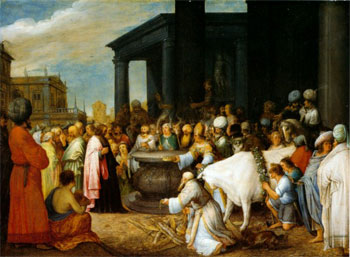
Paul and Barnabas were in Lystra and saw a man who was lame since birth. They healed him based on his faith and the people praised them. The people said they were gods and called them Jupiter and Mercurius. The people wanted to make sacrifices to them but Paul and Barnabas stopped them and gave all of the credit to the Lord. They used it as a teaching opportunity.

5.   Review Acts 14:19–22 and compare in writing the way the people treated Paul in these verses with how he and Barnabas were treated in Acts 14:8–13. How did Paul say we would enter the kingdom of God? How are both these experiences examples of the principle Paul taught in verse 22?
In verses 8-13 they were praised and respected whereas in verses 19-22 Paul was stoned and dragged out of the city. They wanted him dead! He wasn’t dead and went on teaching the word of the Lord. He went to other cities then came back to the one he was stoned in and told the disciples that they would enter the kingdom of God after “much tribulation.” In both examples they exercise faith in the Lord. When we have faith in God we can make It through our trails and return to live with him.

Friday, January 11, 2013

Choice 6 Herod and Peter!

And I'm back! This is the second half of the New Testament, Acts through Revelations and I'm pretty excited. For this share and report I will be looking at Acts chapter 12. I'm going to compare and contrast King Herod and the Prophet Peter.


Choice 6: Acts 12. Herod and Peter


Read Acts 12. Compare and contrast the two main characters. Complete the following chart:


Herod, the King
 
Peter, the Prophet
 
What motivated each of them?
 
Herod was motivated by hatred and by his people. "He saw that it (being the death of James) pleased the Jews." So with this he decided to do the same to Peter.
 
Peter was motivated by the Lord. The Lord had given him a work to do and he wanted to fulfill his duty to the people. Members of the church prayed for him and the Lord harkened unto their prayers!
 
How did they deal with others?
 
Herod was vicious to others. He was killing the prophets in cold blood. He sentenced Peter's guards to death because they let him escape.
 
The Prophet Peter was mindful of others. When he escaped he went right to Mary's (the mother of John) house to tell them that he was freed and safe from harm.
 
How did God deal with them?
 
Herod was a wicked man and was mocking God. The Lord then caused him to be eaten by worms. He was given a disease and died!
 Peter was blessed and was sent an angel from the Lord to release him from prison.